Skip to content
334-686-0770

Licensed · Bonded · Insured

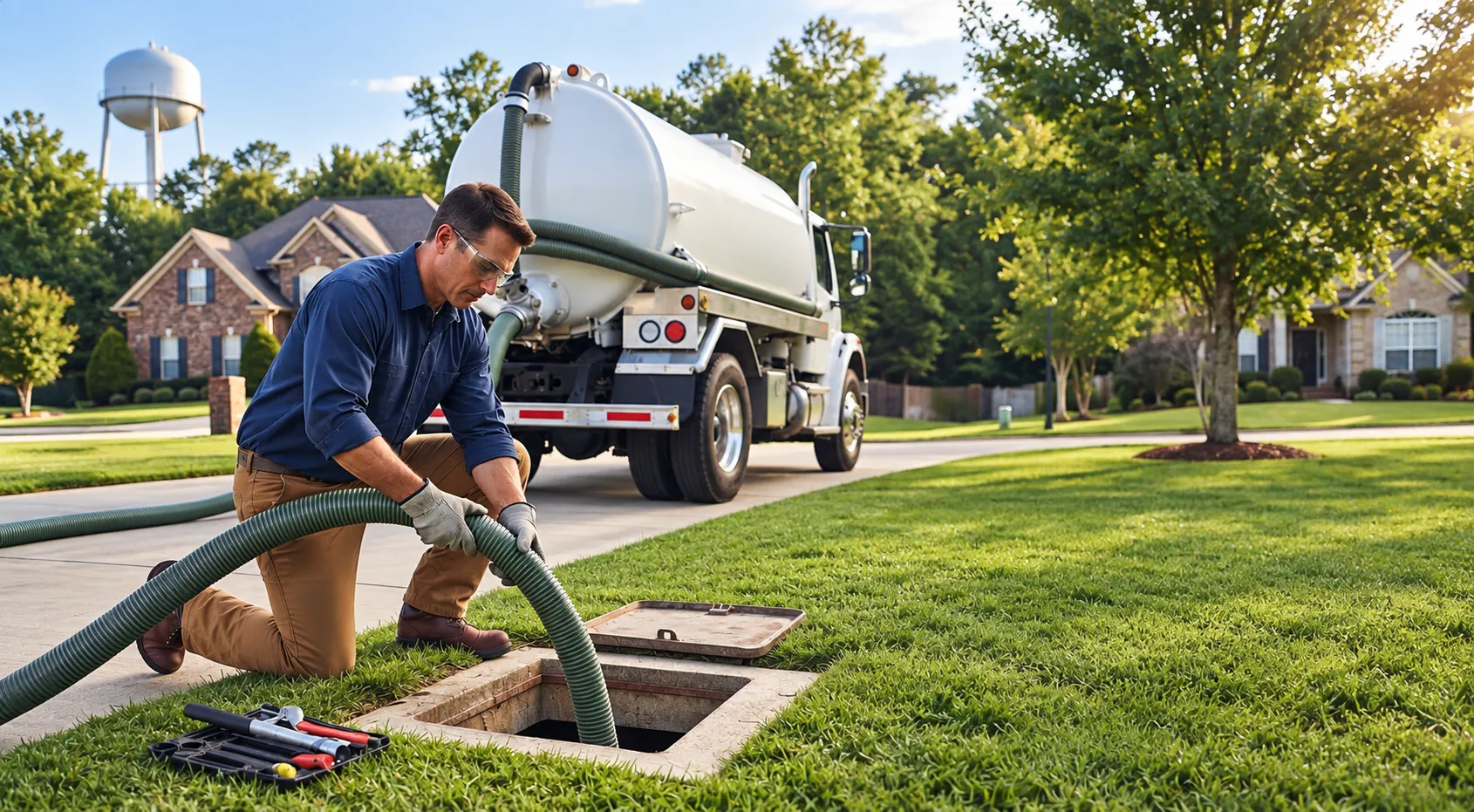
A technician kneeling beside an open septic tank lid on a suburban lawn, running a suction hose from a white vacuum tanker parked on the driveway behind him

Dothan Septic Tank Service: Septic Tank Pumping & Cleaning, Repair, Installation & Replacement, and Emergency Septic Service for Residential & Commercial Properties

Dothan Septic Tank Service has 20 years of experience keeping septic systems running for homes and businesses across Dothan and the surrounding Wiregrass region. We handle septic tank pumping and cleaning, septic tank repair, installation and replacement, septic tank inspection, drain field repair and replacement, and 24/7 emergency septic service. Beyond the core lineup, we also work on aerobic treatment units and older cesspool systems still in service around Houston County. One call covers whatever the system needs, instead of tracking down a different specialist for each type of work.

Every job starts with a free on-site estimate, not a phone quote, and every price is itemized before we touch a shovel. We're a member of the Alabama Onsite Wastewater Association and comply with Alabama Department of Public Health onsite sewage regulations on every installation and repair. Our crews are also certified to perform percolation testing and site evaluations, so a new system gets sized and sited correctly the first time.

Get a Free Estimate

Septic Tank Services in Dothan, AL

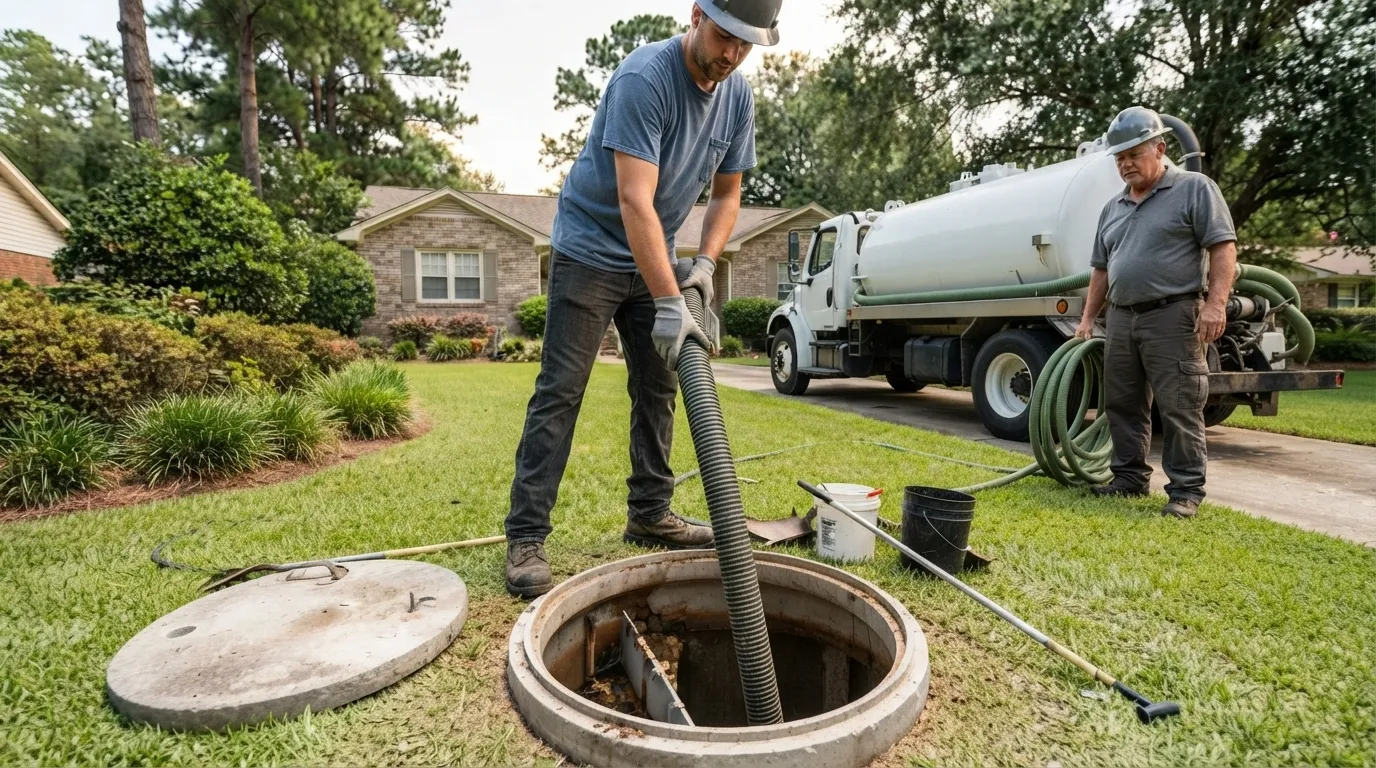
A technician feeding a vacuum hose into an open concrete septic tank riser on a front lawn, the lid levered aside beside him, while a second technician works at the hose reel of a white vacuum tanker parked on the driveway

Septic Tank Pumping and Cleaning

Septic tank pumping removes the sludge and scum that build up in a tank over time, and most homes need it done every three to five years depending on household size and tank capacity. Standard residential tanks run 1,000 to 1,500 gallons, and we pump them out with a vacuum truck that clears solids a garden hose or gravity drain never could. We pump, clean, and empty tanks in the same visit, so a routine pump-out also covers cleaning the walls and clearing accumulated solids a quick pump-and-go service tends to leave behind. For older properties still running a cesspool instead of a modern tank, our crews know the difference in access and pumping technique and service both.

Skipping a scheduled pumping is what usually turns a routine service call into a backed-up drain field months later, since solids that aren't removed eventually work their way into the field and clog it. We check the tank's baffles and sludge layer, along with the effluent filter (the last line of defense before wastewater reaches the drain field), during every pump-out and flag anything that needs attention before it becomes a bigger repair.
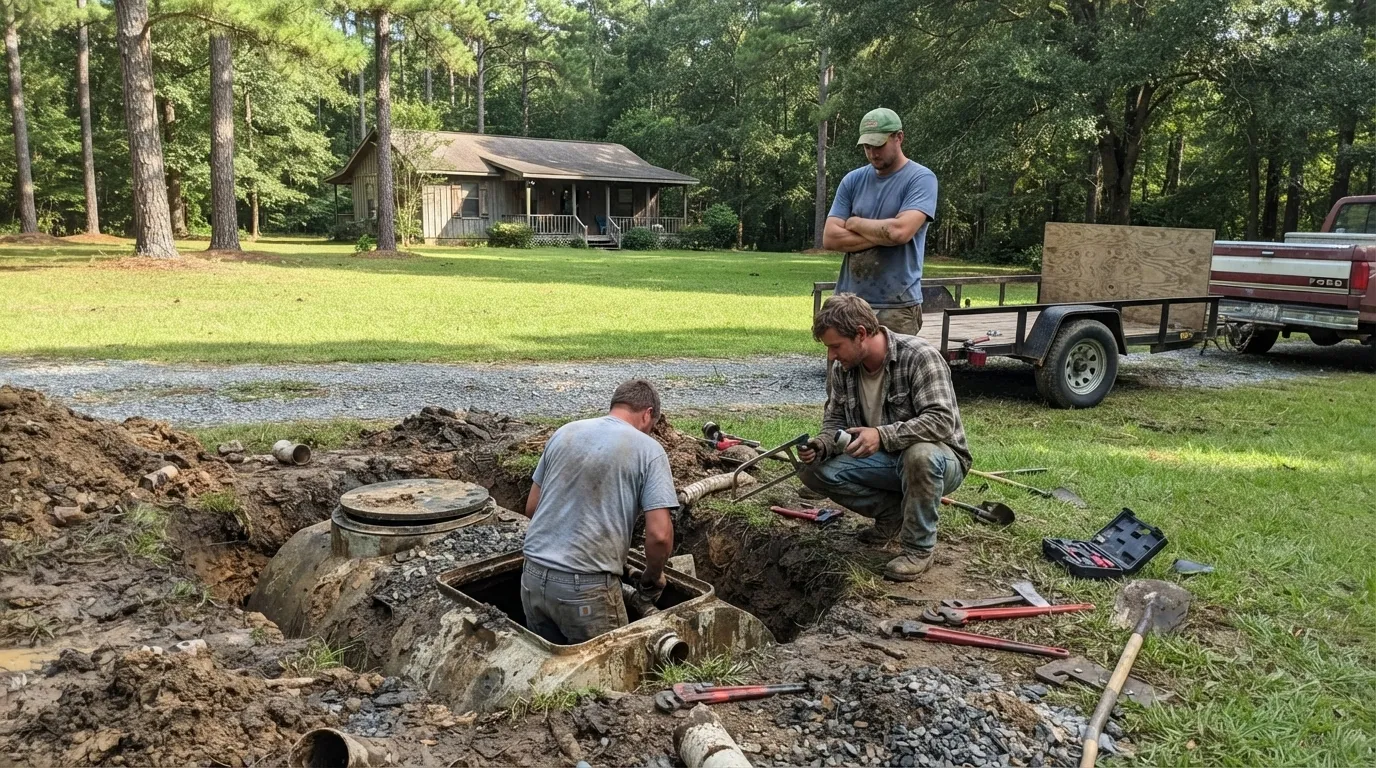
Three technicians working on an excavated septic tank at a rural home, one reaching into the opened tank while another cuts pipe on the bank, with the concrete lid set aside and a truck and trailer on the drive behind

Septic Tank Repair

Septic tank repair calls rarely come from the whole tank failing at once - they trace back to one specific component: a cracked or detached baffle, a degraded lid, a clogged distribution box, or a failing effluent pump on a pump-assisted or aerobic system. We diagnose the actual point of failure before recommending work, rather than defaulting to the most expensive fix.

Baffle repair and replacement, lid replacement, distribution box repair, and pump, alarm, and float switch service each come up often enough that we keep parts for all of them on the truck. Older tanks often used a concrete baffle that corrodes over decades, and we replace it with schedule 40 PVC, which won't degrade the same way. Slow drains, a lingering odor near the tank lid, standing water over the drain field, or a system that seems to be working harder than it used to are all worth a diagnostic visit before the problem spreads.

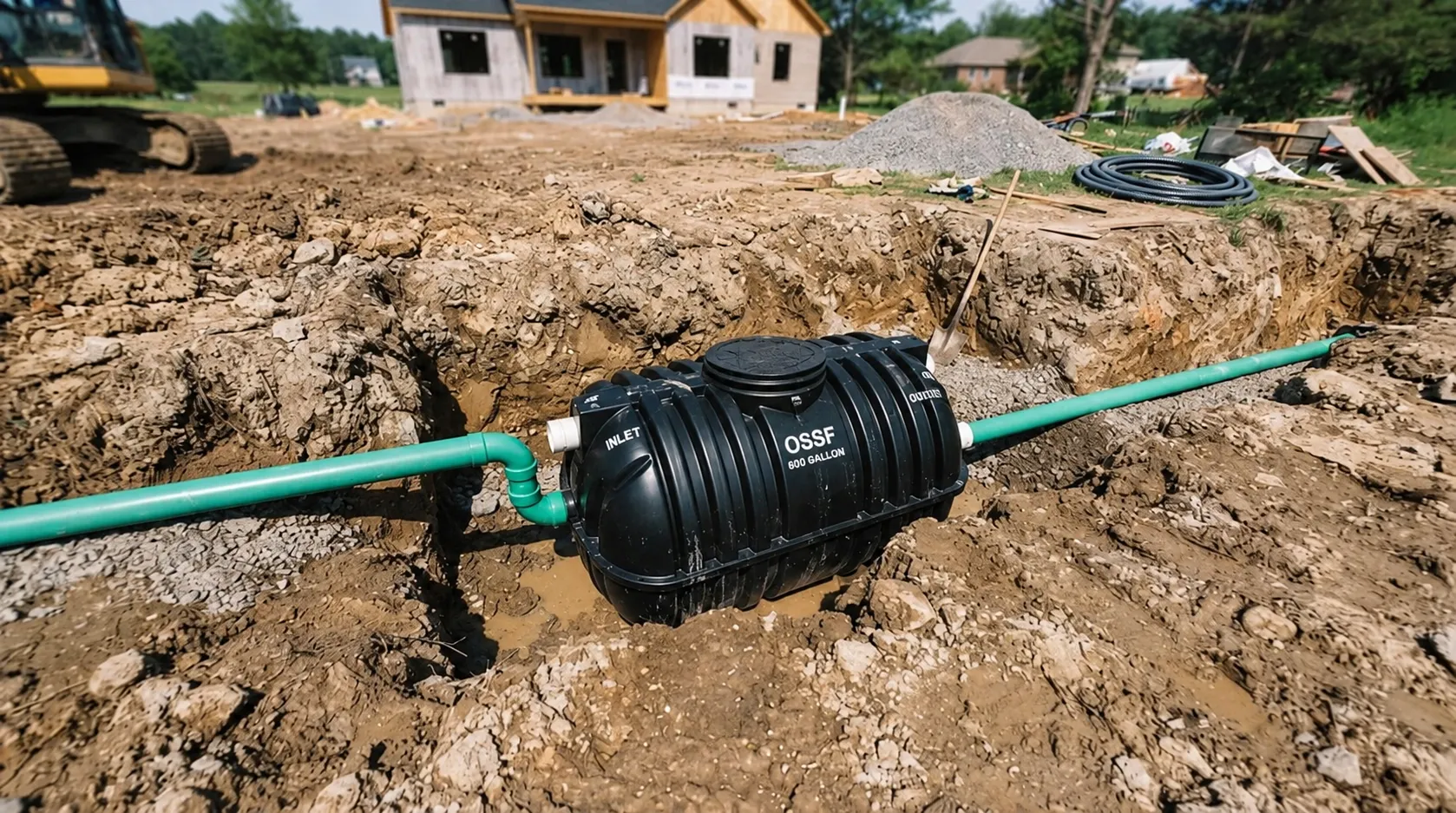
A new polyethylene septic tank bedded in an open excavation with green PVC inlet and outlet lines connected, an excavator and a gravel pile behind it, and a house under construction in the background

Septic Tank Installation and Replacement

Installing a new septic system on a lot without city sewer access means sizing it to the home's bedroom count and the soil's absorption rate, which is why we run a percolation test and site evaluation before laying out the design. A typical three-bedroom home needs at least a 1,000-gallon tank, a four-bedroom home needs 1,500 gallons or more, and we install both concrete and polyethylene tanks depending on what the site and budget call for. Installation covers the tank and distribution system, built around real soil data rather than a generic layout, plus a riser when easier future pumping access is worth the add-on.

Replacement is a different situation with the same underlying job: an old or failed tank comes out, a new one goes in, sized correctly for the property this time around. We handle both a straightforward tank swap and, when the soil doesn't support a standard gravity system, an upgrade to an aerobic treatment unit designed for tighter or wetter lots common in parts of Dothan.

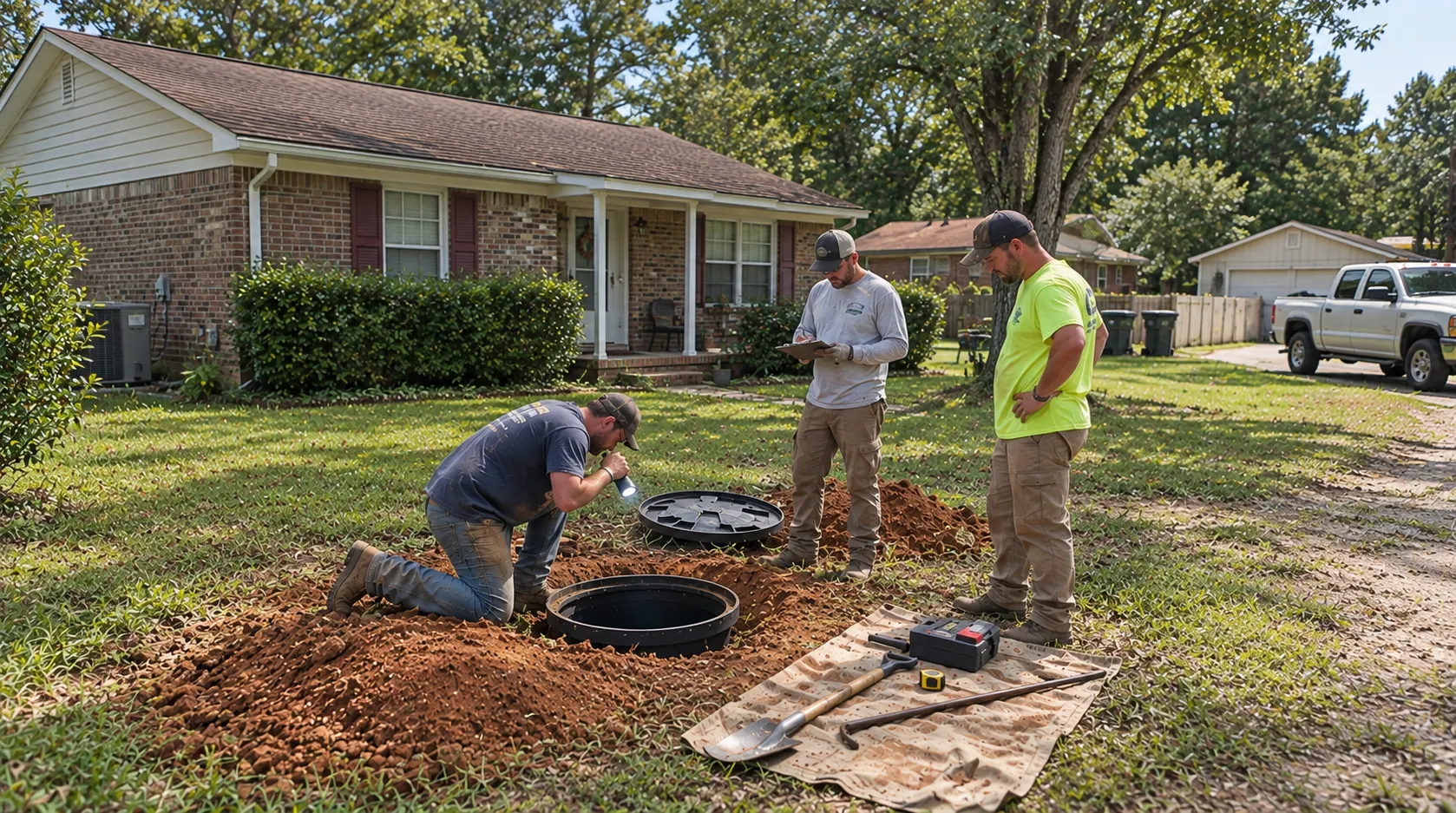
Three technicians inspecting a septic tank at a brick ranch home: one kneeling with a flashlight over the open riser, another writing on a clipboard, and a third watching, with the riser lid set aside and hand tools laid out on a tarp

Septic Tank Inspection

A routine inspection checks scum and sludge levels, baffle condition, effluent filter cleanliness, and drain field performance, and we recommend one every one to three years even on a system that seems to be working fine. Catching a small issue during a scheduled inspection is almost always cheaper than waiting for it to show up as a backup.

Real estate transactions call for a more detailed inspection, since a buyer, seller, lender, or title company typically wants documentation the system is functioning before closing. A dye test, where a colored tracer is flushed and tracked to confirm the drain field is actually absorbing wastewater, is standard on this kind of inspection. We also run camera inspections when a visual check alone can't pin down where a line is broken or blocked, which saves digging up an entire yard to find one bad section of pipe.

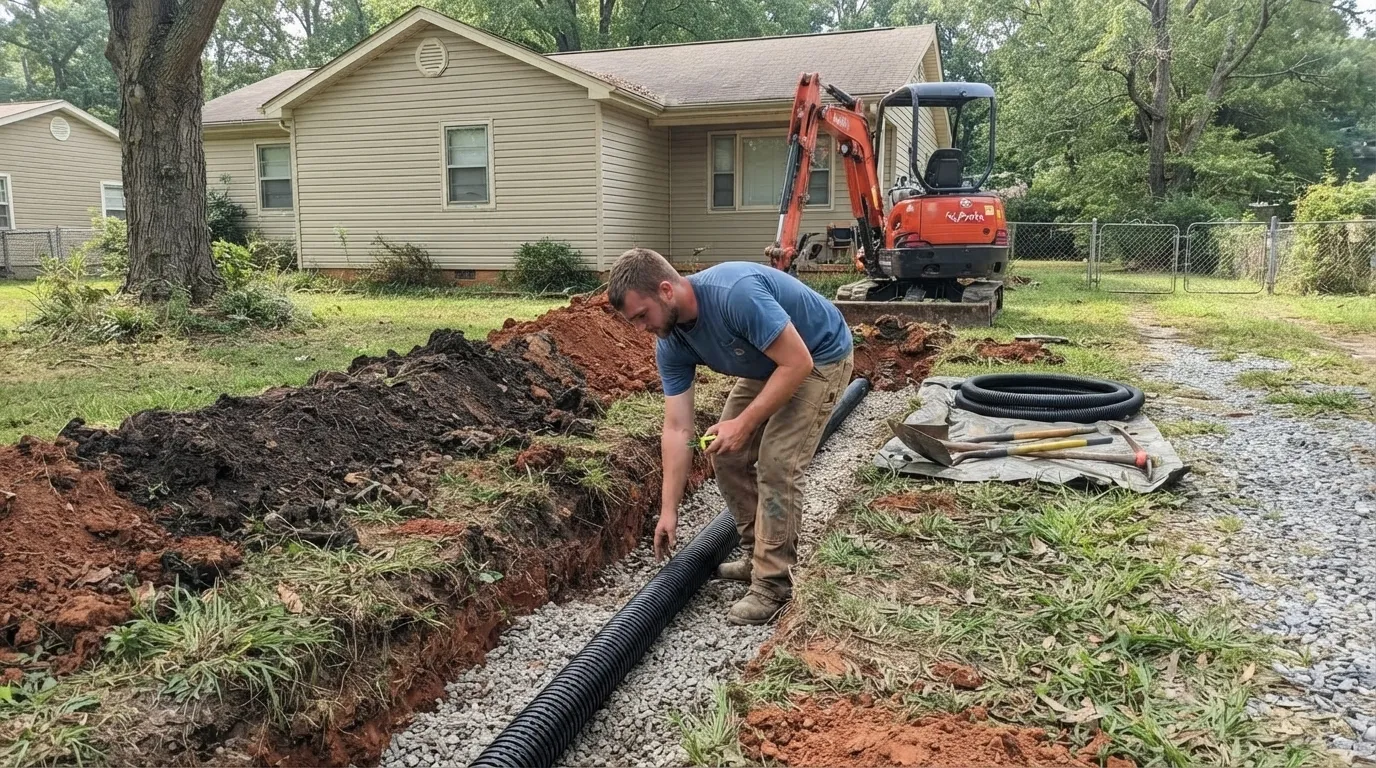
A technician laying black perforated drain field pipe into a gravel-bedded trench beside a mini excavator, with a coil of spare pipe and hand tools on a tarp and fresh spoil banked along the trench

Drain Field Repair and Replacement

A drain field, also called a leach field in some parts of the country, fails when the soil around it can no longer absorb wastewater, usually from years of solids working their way in from a tank that wasn't pumped often enough. Standing water over the field, unusually green grass in one patch, slow drains throughout the house, or a lingering sewage smell near the yard are the usual warning signs. Repair can extend a field's life for years when the damage is caught early.

Once a field is too far gone to repair, replacement means excavating the old lines and building a new absorption area, sized and sited using current percolation data rather than whatever the original permit called for decades ago. We install both conventional perforated pipe in gravel trenches and modern gravelless chamber systems, open-bottom plastic chambers that spread effluent over a larger area and hold up better in tighter soils. This is different work from installing a drain field on a lot that never had one, which we handle as new-system installation rather than replacement.

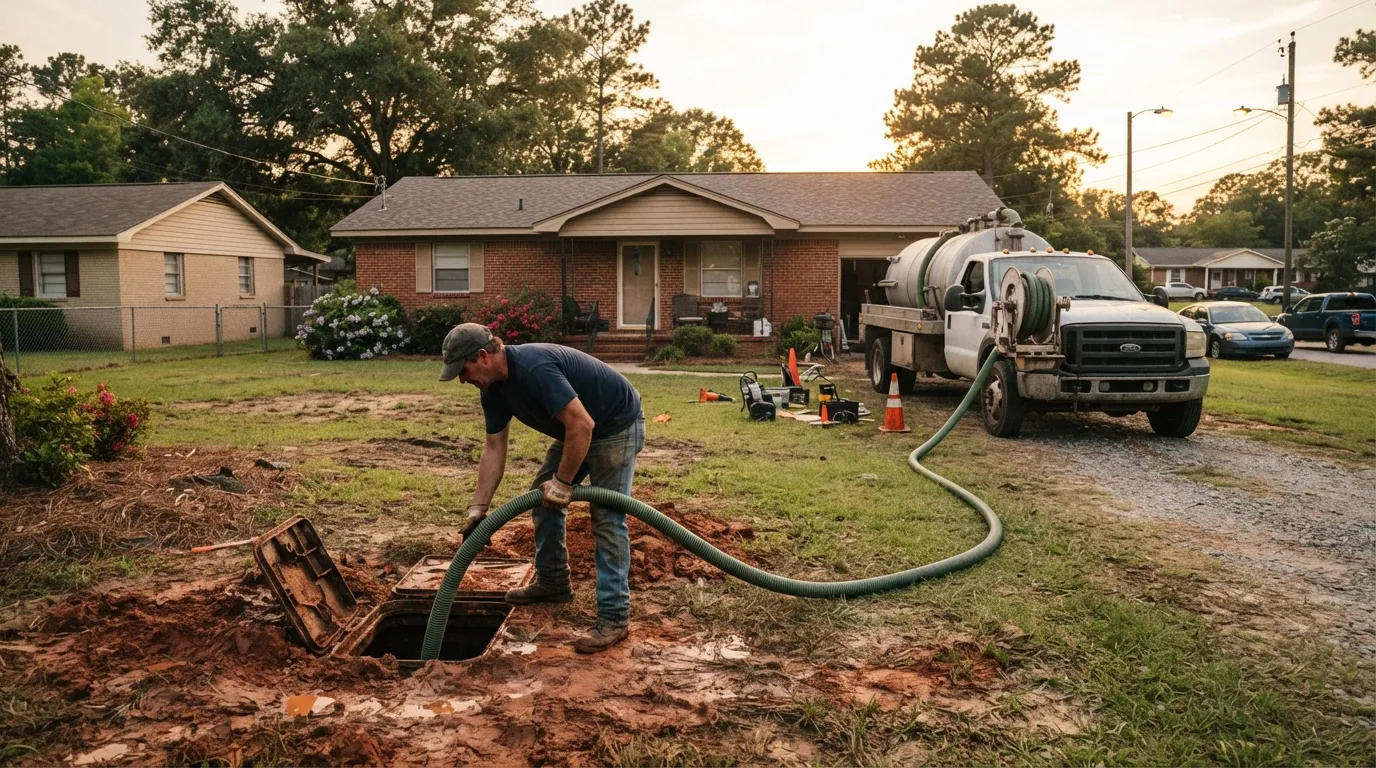
A technician feeding a vacuum hose into an open septic tank access on a churned, muddy lawn at first light, with the lid levered up beside him, traffic cones and equipment set out, and a vacuum tanker parked on the drive of a brick home

Emergency Septic Service

24/7

A septic tank backing up into the house or overflowing in the yard after a heavy Dothan rainstorm needs an emergency response, and we don't wait for business hours to give one. Our crews run 24/7 for sewage backing up through a drain, a lid overflowing, a system that stops accepting water entirely, or a sewage smell that suddenly shows up indoors.

Most emergencies trace back to either a tank that's overdue for pumping or a drain field that's already failing. An emergency visit starts with checking the tank level, the pump if the system has one, the distribution box, and any visible signs of surfacing effluent, which usually points straight to the cause before we recommend a fix. Routine pumping and inspection are the best way to avoid the emergency call in the first place, but when it happens, we answer.

Why We're the Best Septic Tank Company in Dothan, AL

Real Local Experience & Credentials

We've spent 20 years serving Dothan and the surrounding Wiregrass area, long enough to have handled just about every septic issue this region's soil and older housing stock can produce. We're members of the Alabama Onsite Wastewater Association and comply with Alabama Department of Public Health onsite sewage regulations on every job. Our crews are certified to perform percolation testing and septic system site evaluations, which matters most on new construction and full replacements where getting the site work right the first time avoids a costly redo.

Modern Materials & Craft

We install Infiltrator-brand and equivalent modern drain field and tank components rather than whatever's cheapest on a given day. Proper baffle and riser installation goes into every job we do, since a detached baffle is one of the most common causes of early tank failure we see in this area, and it's a problem that's easy to prevent at install time and expensive to fix later.

Built for Every System Type

Not every lot in Dothan sits on soil that supports a standard gravity-fed system, so we work on both conventional tanks and aerobic treatment units built for tighter or wetter lots. We're also familiar with older cesspool systems that are still in active use on properties across the area, a system type some newer septic companies simply won't touch.

The Dothan Septic Tank Service Process

  1. 1. Contact & Free Estimate

    Call or request service online and we'll schedule a free on-site visit, not a phone-quoted guess. A technician walks the property, locates the tank and drain field if they aren't already marked, and gets a firsthand look at what's actually going on before anyone talks about a fix.

  2. 2. Inspection & Diagnosis

    We check tank levels, baffle condition, and drain field performance, and run a camera inspection when a line issue isn't visible from the surface. This step is what separates a guess from an actual diagnosis, especially on an older system where the original layout was never documented.

  3. 3. Transparent, Itemized Quote

    Before any work starts, you get a written, itemized quote broken down by the actual work being done, not a single lump number. If percolation testing or permitting is needed for an installation or replacement, that gets built into the quote up front rather than surfacing as a surprise later.

  4. 4. Service or Installation

    Our crew performs the work: a pump-out, a component repair, a full tank installation, or a drain field rebuild, depending on what the diagnosis called for. We follow the same process whether it's a routine pumping or a full system replacement.

  5. 5. Final Walkthrough & Documentation

    We walk the finished work through with you and explain what was done and why. For a real estate transaction or a permit-required installation, we provide the documentation needed for closing or for Houston County and Alabama Department of Public Health records.

Planning Your Septic Service in Dothan, AL

Routine work like pumping and inspection is usually scheduled same-day or next-day, since most of our calendar is kept open for exactly that kind of quick-turnaround service. A new installation or full system replacement runs on a longer timeline. Percolation testing and Houston County and Alabama Department of Public Health permitting both have to happen before any digging starts, and permit turnaround alone can add a week or more depending on the county's current workload.

Planning ahead matters most for anyone building new or replacing a failed system, since a design that skips the percolation step or gets permitted incorrectly can mean redoing work that was already paid for. Routine maintenance customers don't need to plan around any of this. A call today usually means a technician on-site tomorrow.

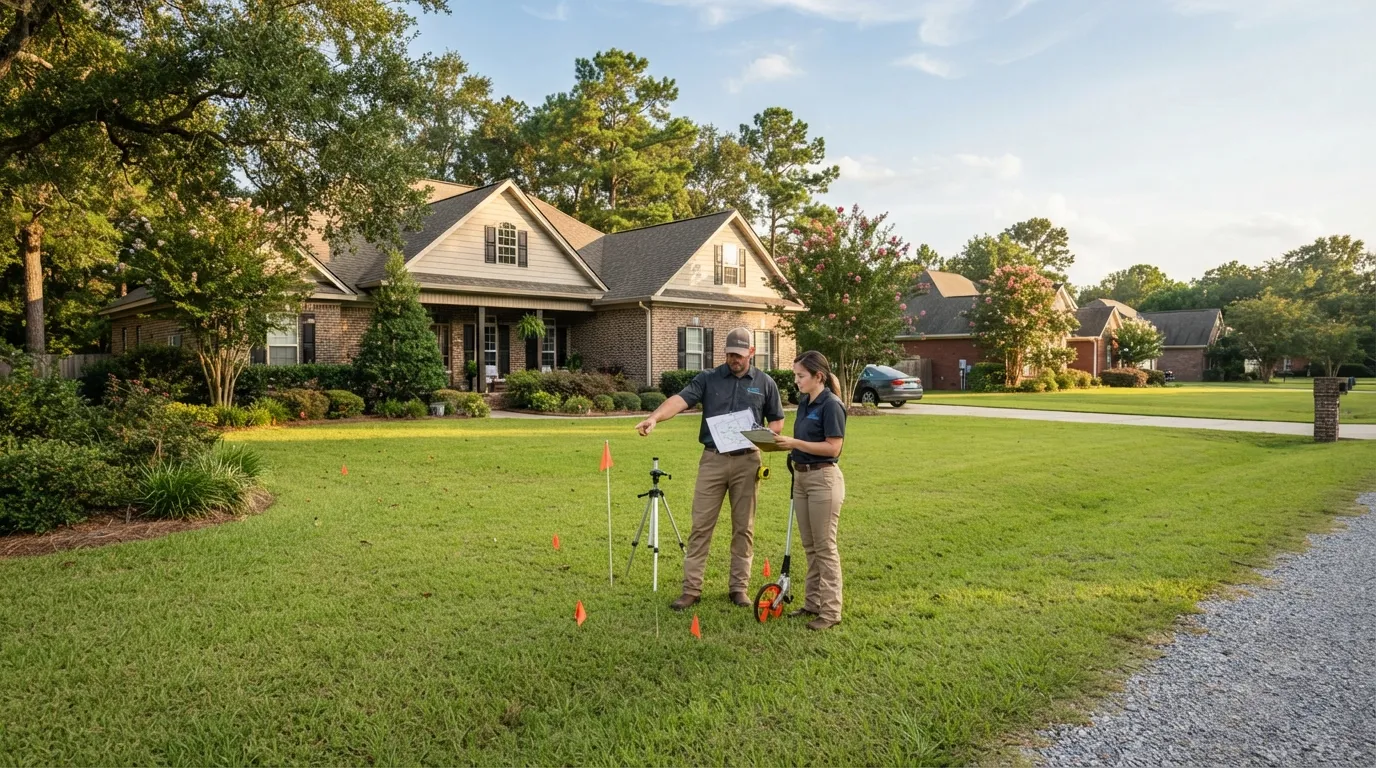
Two technicians running a site evaluation on a front lawn — survey flags and a tripod level set out across the grass, a measuring wheel in hand and a site plan on a clipboard between them

How Much Does Septic Tank Service Cost in Dothan, AL?

How Much Does Septic Tank Service Cost in Dothan, AL?
ServicePrice RangeWhat Drives the Price
Septic Tank Pumping & Cleaning$300 to $600Tank size, how accessible the lid is, whether it's buried and needs excavating
Septic Tank Repair$150 to $1,500Which component failed (baffle, lid, distribution box, or pump/alarm), whether excavation is needed
Septic Tank Inspection$150 to $650Routine maintenance check versus a real estate transaction inspection, camera inspection add-on
Septic Tank Installation$3,600 to $12,500Tank size, soil conditions, distance from the house, whether a standard or aerobic system is needed
Septic Tank Replacement$3,000 to $25,000Tank-only swap on the low end, full system replacement including drain field on the high end
Drain Field Repair$1,500 to $5,000How much of the field is affected, whether repair or partial rebuild is needed
Drain Field Replacement$5,000 to $20,000Field size, soil conditions, whether the original layout can be reused
Percolation TestingAround $1,300Required for most new installations and full replacements before permitting

Emergency and after-hours calls run higher than scheduled service, and a hard-to-reach or buried lid can add to any job's cost. We give you the actual number for your situation during the free estimate, before any work begins.

Proudly Serving Dothan and the Wiregrass Region

Dothan Septic Tank Service works throughout Houston County and the surrounding Wiregrass region of southeast Alabama. Beyond Dothan itself, we serve Headland, Ashford, Cottonwood, Ozark, and Enterprise, along with the smaller communities in between.

If your property sits outside Dothan proper, give us a call. Most of Houston County and the immediate surrounding counties are within our normal service radius.

An evening aerial view of downtown Dothan, with lit streets running past low-rise brick storefronts, a domed civic arena and a single tower against a flat horizon

Here's What Happy Dothan Customers Have to Say

  • Sarah M.3 weeks ago on
    Dothan Septic Tank Service pumped our tank the same day I called after we noticed slow drains all over the house. They also caught a cracked baffle during the visit and fixed it before it turned into a bigger problem.
  • David R.2 months ago on
    We needed a full septic inspection before closing on our new house and they had the report back to us in two days. Made the whole real estate process a lot less stressful.
  • Karen W.5 months ago on
    Dothan Septic Tank Service installed a new aerobic system on our lot after the old drain field failed. The crew explained every step and the whole thing was done faster than we expected.
  • Michael T.8 months ago on
    Called them for an emergency backup on a Sunday night and someone was out within the hour. Can't say enough good things about the response time.

Dothan Septic Tank Service FAQs

How much does septic tank service cost in Dothan, AL?

Septic tank cost in Dothan depends on the specific job. Here's what to expect:

How much does septic tank service cost in Dothan, AL?
ServicePrice Range
Septic Tank Pumping$300 to $600
Septic Tank Repair$150 to $1,500
Septic Tank Inspection$150 to $650
Septic Tank Installation$3,600 to $12,500
Septic Tank Replacement$3,000 to $25,000
Drain Field Repair$1,500 to $5,000
Drain Field Replacement$5,000 to $20,000
Percolation TestingAround $1,300

Every septic tank price quote is confirmed in writing during your free on-site estimate, so you know the exact number before any work begins.

How often should a septic tank be pumped?

Most homes need pumping every three to five years, though household size, tank capacity, and how much water the home uses all affect that interval. A larger household or a smaller tank may need pumping closer to every two to three years.

Are you licensed and insured?

Yes. We're licensed and insured, a member of the Alabama Onsite Wastewater Association, and compliant with Alabama Department of Public Health onsite sewage regulations on every job.

Do you work on aerobic treatment units, not just standard septic tanks?

Yes. We install and service both conventional gravity systems and aerobic treatment units, which are often required on lots where the soil can't support a standard drain field.

What's the difference between a routine inspection and a real estate inspection?

A routine inspection checks that an existing system is functioning normally. A real estate transaction inspection is more detailed and produces documentation a buyer, seller, or lender needs before closing.

What are the warning signs my drain field is failing?

Standing water over the field, an unusually green or soggy patch of grass, slow drains throughout the house, and sewage odor near the yard are the most common signs. Catching it early often means repair instead of a full replacement.

Do you offer emergency septic service?

Yes, 24/7. A tank backing up, overflowing, or a drain field flooding after heavy rain doesn't wait for business hours, and neither do we.

What do I need to do before you arrive for an estimate?

Nothing beyond knowing roughly where your tank and drain field are located, if you know. If you don't, we'll help locate them as part of the visit.

Call 334-686-0770